


Stop Guessing Your ROI
A lot of businesses think they have a decent handle on marketing ROI because they can see the obvious conversion points. They can see quote requests, form fills, bookings through the website, and sometimes online purchases. That all matters, but it still only shows part of the picture. If your business regularly wins work over the phone, especially for higher-value services, there is a good chance some of your best leads are not being counted properly at all.
This is the part that gets missed. Someone clicks a Google Ad, lands on your site, reads enough to feel comfortable, then calls. Someone else finds you through SEO, lands on a service page, and decides they would rather speak to a real person than fill out a form. From the business side, both of those are real enquiries. From the reporting side, they often disappear if the setup only values what happens neatly inside the browser.
That is why call tracking matters. Not because it sounds clever, and not because it gives you another dashboard to look at, but because it gives you a more honest view of how people actually buy. If calls are part of how your business closes work, they need to be part of how you measure performance. Pair that with an 0800 number and you also make it easier for people to contact you in the first place. In New Zealand, 0800 and 0508 business numbers are toll-free for callers, with the business paying for the call, which removes one more bit of friction when someone is deciding whether to make contact now or leave it for later.¹²
The problem with form-only reporting
The issue with form-only reporting is not that it is wrong. It is that it is incomplete. If you look at the end of the month and see six form enquiries from paid search, it is very easy to say paid search generated six leads. But that assumes every interested person wanted to type out a message, wait for a reply, and follow a tidy digital journey from click to form. That is not how plenty of people behave, especially when the service is urgent, expensive, or comes with questions they want answered before they commit.
In the real world, people call when intent is stronger. They call when they want clarity, when they want reassurance, or when they just want to get moving. That is common in trades, clinics, legal, repairs, professional services, and most businesses where the customer wants to speak to someone before making a decision. In those cases, the phone call is not some side action sitting off to the edge. It is often the lead that matters most.
That is where businesses start getting a distorted view of what is working. A campaign looks average because the form numbers are light, but in reality it is generating quality phone enquiries every week. The report looks tidy, but it is missing the part that actually turns into revenue. Once that happens, budget decisions start getting made off partial information, and that is usually where good channels get undervalued.
Why an 0800 number still matters
People sometimes talk about 0800 numbers as if they are a bit dated, but that misses the point. They still do a simple job well. They make calling feel easier, more established, and more deliberate. They are often easier to remember than a random mobile number, and because the call is free to the customer, they remove one more reason for someone to hesitate. Spark is still very clear about this in its own business material. With a business 0800 or 0508 number, customers call toll free and the business pays for the call.¹²
That does not mean every business has to have one. Plenty of businesses do fine with a normal landline or mobile number. But if you are advertising across regions, want a cleaner national presence, or simply want calling to feel like a clear next step, an 0800 number can make a lot of sense. It is not magic. It just reduces friction, and reducing friction is usually a good thing when you want people to take action.
Where it gets more useful is when that number is tied into proper tracking. On its own, it is just a contact method. Connected properly, it becomes part of your attribution setup. That is when it stops being just a convenience for the customer and starts becoming useful for the business as well.
What Google Ads can do on its own
Google Ads already gives you more call data than many businesses are using. Google’s own help documentation explains that call reporting runs on Google forwarding numbers and lets you measure the performance of call assets, location assets, and call ads. It can track things like call duration, call start time, whether the call connected, and caller phone number for calls longer than 15 seconds in supported cases. Google also lets you count phone calls of a chosen duration as conversions, which is useful when you want to filter out accidental taps or very short, low-value calls.³⁴
Google also supports tracking calls from a phone number on your website. Their setup uses a Google forwarding number and a snippet that replaces the number on the page so you can measure how effectively ad clicks lead to phone calls from the site. If you want your reporting to include calls that happen after someone visits the website rather than just calls made directly from an ad, that matters.⁵
That is a solid starting point, and for some businesses it is enough to get basic visibility. But it still has limits. It can tell you that a call happened after an ad interaction. It does not automatically tell you whether that call was any good, whether it booked, whether it turned into a job, or whether it became a recurring customer. That is the difference between measuring activity and measuring commercial value.
Google does support importing phone call conversions when the real business result happens later, and its own documentation explicitly says this can help track when ads lead to important calls and when those calls lead to sales or other valuable customer actions. It also notes that this tends to work best if you have a system for tracking call information and a CRM or similar process behind it.⁶ That is the point where call tracking stops being a nice extra and starts becoming a proper measurement tool.
Where tools like WildJar and Aircall come in
This is where third-party platforms start becoming practical rather than theoretical. Google can give you a decent level of call visibility, but if you want a clearer picture of source attribution, keyword-level insight, call handling, recordings, routing, or team performance, you usually end up looking beyond native ad platform reporting.
WildJar is a good example of the attribution side of the stack. Their own material focuses on call tracking, analytics, dynamic number insertion, call recording, and keyword and visitor analytics. In plain English, that means you can swap numbers based on the visitor source, reduce the guesswork around how a lead called, record calls for review and training, and tie the digital journey back to the search terms that drove the enquiry. If you are trying to answer questions like “which keyword actually made the phone ring?” or “did this landing page produce calls or just traffic?”, that is the kind of setup WildJar is built for.⁷⁸
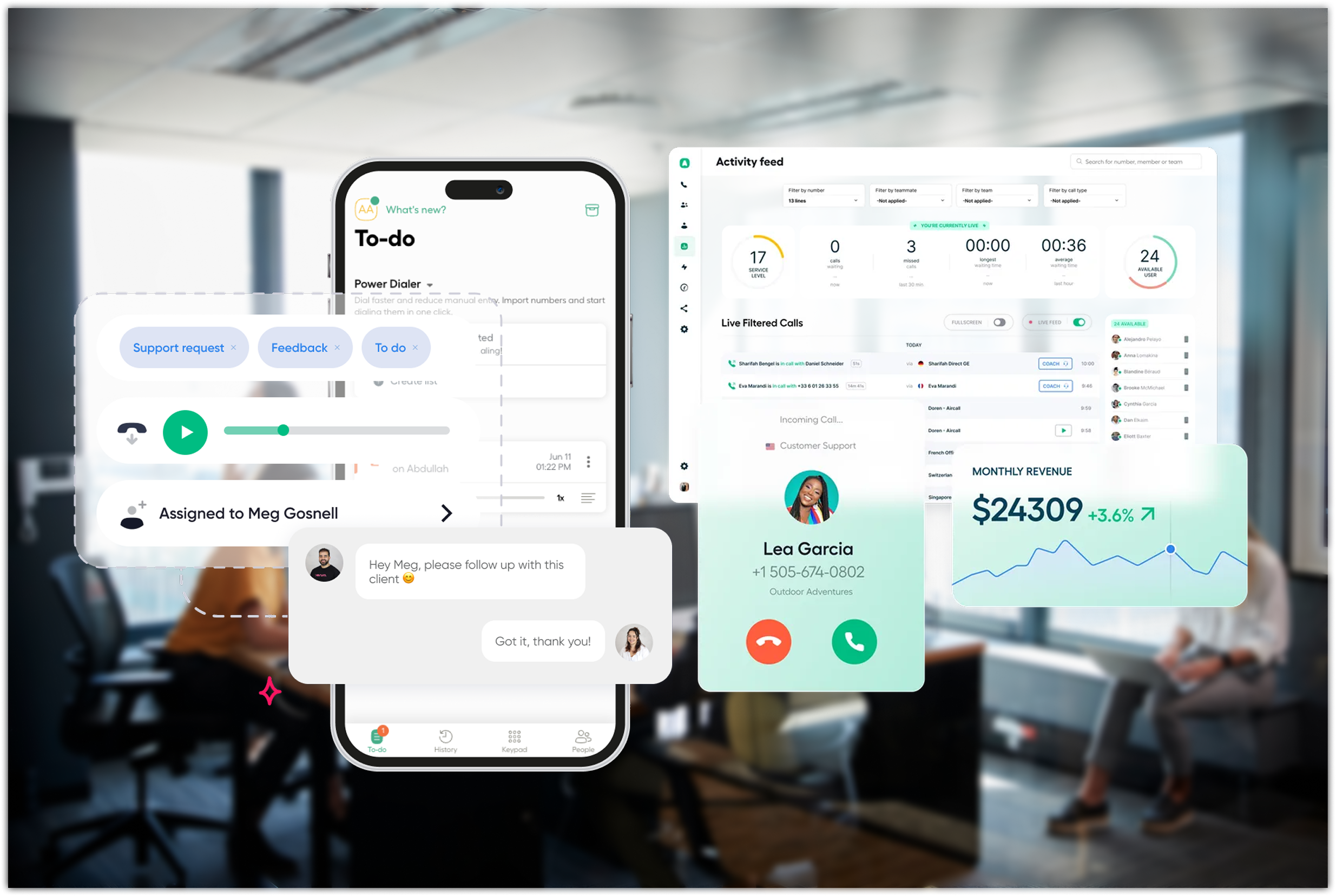
Aircall sits in a slightly different place. It is more of a communications and operations platform than a pure attribution tool. Aircall describes itself as a customer communications platform and talks about bringing the team together around customer conversations, while also offering analytics, live note-taking, tagging, and detailed analytics across phone operations. If your problem is not only “where did this call come from?” but also “how did the team handle it once it landed?”, that is where a platform like Aircall becomes relevant.⁹
That distinction matters. WildJar is useful when you want better visibility into what drove the call. Aircall is useful when you also care about what happened once the call reached the business. One is more marketing and attribution-led. The other sits closer to operations, response quality, and team visibility. Depending on the business, you might need one, both, or neither. The point is not the tool itself. The point is understanding which part of the problem you are actually trying to solve.
Why this matters for SEO as well as paid ads
A lot of people talk about call tracking as if it is mainly a Google Ads issue, but SEO suffers from exactly the same blind spot. A service page can rank well, bring in the right kind of traffic, and do exactly what it is supposed to do. The visitor lands, reads enough to feel comfortable, then calls. No form gets filled. No neat website conversion fires. In the dashboard, the page can look average. In real life, it may be doing some of the best commercial work on the site.
This happens most often on high-intent pages where the visitor is not interested in starting a slow digital back-and-forth. They want to talk to the right person, get an answer, and move on. If your reporting only values form submissions and online actions, those pages will almost always get less credit than they deserve. That is one of the reasons businesses can end up underinvesting in the very content and landing pages that are quietly driving good enquiries.
Once you understand that, the logic becomes pretty simple. Marketing should be judged on the business it helps create, not just the parts that happen to be easiest to measure. If customers regularly find you online and then call, that is part of the conversion path whether your dashboard reflects it properly or not.
Where businesses usually get this wrong
Most businesses do not fail here because they have no data. They fail because the data is scattered. Marketing sees clicks, spend, cost per lead, and forms. The person answering the phone can tell you the lines were busy. Sales or admin knows which enquiries turned into work. But if none of that is stitched together, the reporting ends up being fragmented by default.
That is when the wrong decisions start creeping in. A campaign gets paused because the cost per form looks high, even though it has been generating strong phone leads all month. An SEO page gets written off because it is not producing many visible website conversions, even though it consistently makes the phone ring. A channel gets praised because it produces lots of “leads,” but a fuller view would show that most of them go nowhere.
This is why proper attribution matters. You do not need a perfect system, because most businesses will never have a perfectly neat one. But you do need a system that reflects how the business actually wins work. If calls are part of the sales process, they need to be treated like a real conversion path rather than an afterthought.
What the real payoff is
The payoff is not prettier reporting. It is better judgement. Once you can properly connect calls to channels, campaigns, and outcomes, you stop relying so heavily on surface-level metrics. You can see which campaigns are generating conversations that actually lead somewhere. You can tell the difference between traffic that looks busy and traffic that creates real opportunity. You can make better decisions about where to push spend, where to improve the site, and where your number needs to be more visible.
Google’s own documentation makes that logic pretty clear as well. It says phone call conversion tracking helps you find which keywords, ads, ad groups, and campaigns are best at driving the most valuable phone calls, and helps you understand ROI so you can make better-informed decisions about ad spend.⁴ That is really the point. Better attribution is not about having more data for the sake of it. It is about being able to trust the decisions you make from that data.
It also gives you a more realistic view of lead quality. A form fill and a good phone lead are not always equal. In a lot of businesses, they are not even close. If one channel produces fewer visible conversions but far better calls, that matters. Without that visibility, it is very easy to end up optimising for what is easiest to measure rather than what actually brings in work.
Final thoughts
If your business regularly closes meaningful work over the phone, then phone calls need to sit much closer to the centre of your reporting. Treating them like a secondary action usually leads to undercounted ROI, weak attribution, and decisions based on an incomplete picture. That is especially true if you are investing in Google Ads, SEO, or any channel where the first interaction happens online but the real conversion often happens in conversation.
An 0800 number can help because it makes calling feel easier and removes one more barrier for the customer. Call tracking matters because it helps you understand where those calls came from. Connecting that data back to real outcomes matters even more, because that is what tells you whether the marketing is actually producing business rather than just activity.¹³⁶
That is really the whole point of this. You are not trying to build a fancier dashboard. You are trying to understand what is actually bringing in work. If your current setup stops at form fills and website conversions, there is a good chance you are undercounting some of your best leads. That is worth fixing.
References
- Spark New Zealand. Business Toll Free. https://www.spark.co.nz/business/help/voice/business-toll-free/
- Spark New Zealand. Your customers call free with a business 0800 number. https://www.spark.co.nz/0800
- Google Ads Help. About call reporting. https://support.google.com/google-ads/answer/2454052?hl=en
- Google Ads Help. About phone call conversion tracking. https://support.google.com/google-ads/answer/6100664?hl=en
- Google Ads Help. Set up tracking calls to a phone number on a website. https://support.google.com/google-ads/answer/6095883?hl=en
- Google Ads Help. Import phone call conversions. https://support.google.com/google-ads/answer/6275629?hl=en
- WildJar. Call Tracking and Analytics Software. https://www.wildjar.com/call-tracking
- WildJar. What is Dynamic Number Insertion? https://www.wildjar.com/blog/what-is-dynamic-number-insertion
- Aircall. Intelligent Customer Communications Platform for SMBs & Enterprise. https://aircall.io/


