


Facebook Marketing in NZ: A Practical Guide to Budgets, Ads, and What Works
What is Facebook marketing?
If you are trying to grow a business in New Zealand, you have probably noticed that simply posting on your page and hoping for the best does not work anymore. Organic reach on Facebook has hovered around 5.17% for some time, which means that out of every hundred people who follow your page, only about five will actually see your unpaid updates¹ to their feed. To reach anyone else, you have to look at paid strategies.
This is what Facebook marketing actually is today. It is the practice of using both free community posts and highly targeted paid campaigns across the Meta ecosystem (which includes Facebook, Instagram, Messenger, and their wider audience network) to find and convert customers.¹,²
We have an incredibly active social population here in New Zealand. Around 4.15 million Kiwis are active on social media, and they spend an average of over two hours scrolling through these platforms every single day.¹,² Facebook remains the heavyweight in this space, with about 3.4 million monthly active users in New Zealand, followed closely by Instagram at 2.53 million.¹,²
Many business owners assume they can ignore Facebook because they see low public likes on their organic posts, but that is a mistake. We see a clear pattern of "silent engagement" where users watch, read, and click without ever hitting like or leaving a comment. In fact, local analytics show a 10:1 ratio between the people who quietly view social content and those who publicly react to it.² When we talk about Facebook marketing in the real world, we are talking about using these huge, active audiences to quietly guide customers into your sales pipeline.²
How does Facebook advertising work?
To understand how paid campaigns work, it helps to look at how they differ from search engines. If you run Google Ads, you are capturing existing demand.⁵,⁶ When someone searches for a business lawyer in Auckland or an emergency plumber in Hamilton, they already have a problem and are actively looking for a solution.⁵,⁶
Facebook advertising works on interruption-based marketing.⁵,⁶ People do not open Facebook or Instagram because they want to buy a product or hire a contractor. They open the apps to see what their friends are doing, watch short videos, and unwind.⁵,⁶ Your ad has to interrupt their scroll with a visual and a message so interesting that they stop what they are doing to pay attention.⁵,⁶
The engine that makes this possible is targeting.¹,⁶ Because Meta has years of data on what we like, who we follow, and what we click on, its targeting options are highly precise.⁶,⁹ You can show your ads to people based on their exact location, their interests, their demographics, or how they have behaved in the past.¹,⁹
You can also use custom audiences to show ads to people who have already visited your website, or build lookalike audiences to find new users who share the same characteristics as your best existing customers.¹,⁶,⁹
The trade-off here is that tracking has become much harder over the last few years.⁵ Apple's iOS privacy changes made it difficult for Meta to see what users do after they leave the app, which has reduced standard targeting accuracy.⁵ If you want your campaigns to perform well, you cannot just rely on the basic setup. You need to use advanced tracking like the Conversions API to send data directly from your website's server back to Meta, ensuring the algorithm knows exactly which ads are actually producing results.⁹
In mid-2025, Meta also rolled out its "Andromeda" algorithm update.⁷ This deep neural network relies heavily on machine learning to match ads with users.⁷ The big shift here is that accounts with limited creative diversity have seen their costs skyrocket.⁷ If you only run one or two basic image variations, the algorithm penalises you.⁷ To run a successful campaign, you need to feed the machine diverse creative concepts that speak to different customer motivations.⁷
How much do Facebook ads cost in NZ?
Let's look at the actual numbers. The first thing to know is that New Zealand's ad market is highly volatile.³,⁴ Because we have a small population, a sudden change in spend from a few large corporate advertisers can send local auction prices swinging wildly.³,⁴
Our local ad costs in 2025 went on a rollercoaster.³,⁴ We spent the first half of the year well below global averages, spiked massively during winter, and then reset lower heading into the end of the year.³,⁴
The table below outlines the real median costs for New Zealand campaigns across all industries in 2025, giving you a practical baseline to budget against.
This data shows a very important local trend. Globally, ad costs tend to climb steadily through the third quarter and peak in the fourth quarter due to holiday shopping competition.³,⁴ In New Zealand, however, our cost pressure concentrates heavily in July and August before backing off as we head into the summer holidays.³,⁴
For example, our median CPM skyrocketed by over 100% in July and another 61% in August, hitting an annual high of $54.32.⁴ This was five times higher than our yearly low of $10.00 in February.⁴ Our cost per purchase followed the exact same path, peaking at $83.50 in August before bottoming out at $20.90 in November.⁴
If you were running campaigns in August without knowing these benchmarks, you probably would have assumed your creative was failing. In reality, the local ad auction was simply incredibly crowded.¹,⁴ This is why you must evaluate your marketing performance over a longer, rolling window, rather than making knee-jerk adjustments based on a single expensive week.¹
Facebook ads vs Google ads
When you are deciding where to spend your marketing budget, the comparison of Facebook ads vs Google ads is usually the first debate you will have.⁵,⁶ The right choice depends almost entirely on where your prospective customers sit in the buying journey.⁶,²⁷
Google Ads is the undisputed king of direct, immediate intent.⁵,⁶ If someone needs an emergency plumber in Nelson, they do not want to be convinced, and they do not want to scroll through a social feed.⁶ They want to find a provider, make a call, and get the job done.⁶ Google captures this bottom-of-the-funnel demand perfectly.⁵,⁶
Because of this direct intent, Google leads are generally warmer and close at a much higher rate, typically between 15% and 30% for New Zealand service businesses.⁶ The downside is that Google clicks are much more expensive, often ranging from $2.00 to over $15.00 depending on how competitive your industry is.
Meta Ads is designed to create new demand at the top of the funnel.⁵,⁶ It is perfect for visual, lifestyle, and e-commerce brands where people can make quick, impulsive decisions to buy.⁵,⁶ It is also great for service businesses that want to build trust over time by offering something valuable for free, like a guide, checklist, or webinar.⁵,⁶
Meta clicks are significantly cheaper, usually ranging from $0.50 to $3.00, but because these users were not actively looking to buy when they saw your ad, conversion rates are lower, typically sitting between 1% and 3%.
The most effective strategy does not pick one over the other. It uses both in a unified funnel.⁶
For example, you can use Meta Ads to introduce your brand to a broad local audience.⁶ When those people eventually decide they need your service, they will search on Google, where your search ads are waiting to capture them.⁵,⁶ Finally, you can use Meta's retargeting ads to follow up with anyone who visited your website but did not get in touch.⁶
Kiwi businesses that run this multi-channel approach typically see a 30% to 50% lower overall cost per acquisition than those using either platform alone.⁶

How to create a Facebook ad campaign
Setting up your campaign correctly from day one is essential if you want to avoid wasting budget or getting your ad account restricted by Meta's automated safety checkers.
Here is the exact step-by-step process to get your first campaign live:
Step 1: Set up your Business Portfolio
Never run ads from your personal account or by simply clicking the blue Boost Post button. Go to business.facebook.com and create a Meta Business Portfolio.⁹ Once that is ready, go to the Pages section, click add, and link your existing Facebook Business Page.⁹ You can also link your business Instagram account here.⁹
Step 2: Create your Ad Account
Under the Accounts tab, select Ad Accounts and click create a new ad account.⁹ Make sure you name it clearly and select your correct local currency (NZD) and time zone (Pacific/Auckland).⁹ These settings are locked, and if you make a mistake, you will have to close the account and start a new one, which ruins all your tracking data.⁹ Add your credit card details under the billing section.⁹
Step 3: Install the Meta Pixel
Navigate to Data Sources, click on Datasets, and create a new Pixel.⁹ Copy the 15-digit Pixel ID and paste it into the tracking field of your website.⁹ For best results, ask your developer to set up the Conversions API alongside the standard pixel.⁹ This ensures that your tracking data bypasses web browser ad blockers, giving you a clear view of which ads are actually producing results.⁹
Step 4: Verify your business details
Head to the Security Center inside your portfolio settings and complete the verification steps.⁹ Meta is incredibly strict about checking that advertisers are real people and not bots. Add a second administrator to your account here too, so you do not get locked out of your own assets if your personal profile is ever hacked.⁹
Step 5: Build your campaign in Ads Manager
Open Ads Manager, click create, and select your campaign objective, such as Sales, Leads, or Traffic. Meta sets minimum seven-day budgets based on the complexity of your goal. For example, a Sales campaign requires a minimum of $24.00 for seven days, while a Leads campaign requires at least $70.00 for seven days.
If your campaign starts converting well, scale your daily spend slowly. Do not jump from spending $20 a day to $300 a day overnight. The platform flags sudden spikes in spend as suspicious behaviour, which can result in your account being shut down. Instead, increase your daily budget by 15% to 20% every few days to keep the algorithm stable.
Best Facebook ad formats for small business
Kiwi small businesses have limited time and creative resources, so choosing the right format is all about getting the best return on your design efforts.
These three ad formats are highly reliable for local campaigns:
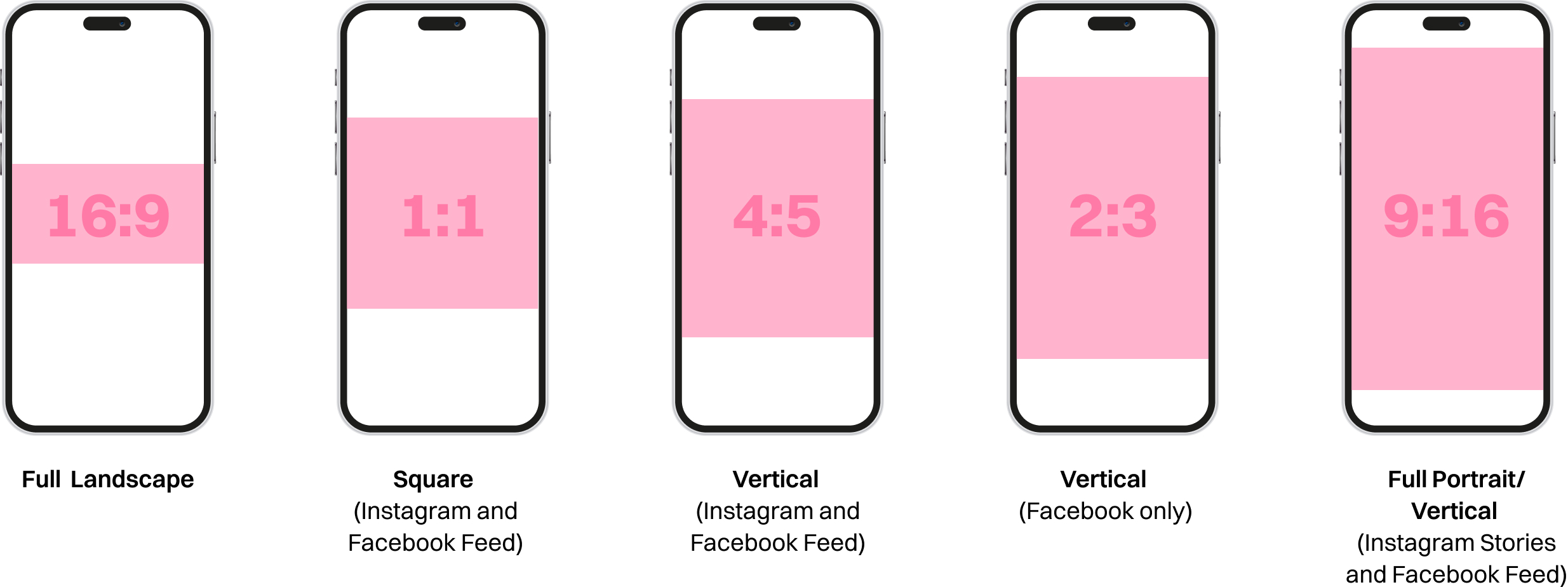
Taller Feed Images (4:5 Format)
This is the standard sponsored post that appears directly in the main news feed, blending in with organic posts from friends and family. While standard square ads (1080 x 1080 pixels) are the easiest default, vertical feed images (1080 x 1350 pixels) are far more effective. Vertical ads take up 15% more screen space on mobile feeds, making them much harder for users to scroll past.⁸
Carousel Ads
This format allows users to swipe through 2 to 10 individual cards, each with its own image or video, headline, and link.⁸,³⁴ It is perfect for retail and e-commerce brands showing off a range of products, or service businesses highlighting different benefits of their offering.⁸,³⁴
The key to a high-performing carousel is consistency.⁸ Every card must be built to a perfect 1080 x 1080 pixel square using the exact same design treatment, layout, and colour palette.⁸ If one card is framed differently or uses a different font, the whole sequence feels disjointed and users will stop swiping.⁸
Stories and Reels
Stories and Reels are full-screen vertical formats designed strictly for mobile viewing.⁸,³⁴ With over 94% of Kiwis accessing the internet on mobile devices, this is a highly effective way to capture complete, undivided attention.¹
To run successful Reels and Stories ads, you must follow two layout rules:
- Captions are mandatory. Around 92% of New Zealand users watch video content with their phone's sound turned off.⁸ If your video relies on someone speaking without text on the screen, they will swipe away within three seconds.⁸
- Respect the safe zones. The top and bottom of a Reel are covered by the app's native user interface, profile overlays, and the call-to-action button.⁸ Keep your product details, logo, and core text centered within a 1080 x 1920 pixel canvas so they do not get hidden under the app's controls.⁸
Making your budget work harder
Running paid ads in New Zealand is not about trying to spend the most money, it is about being smart with the budget you have.
If you are just dipping your toes in, start with a realistic testing budget of $1,000 to $1,500 a month.⁶,⁶ Use this budget to test different ad designs, find out which messages strike a chord with your local audience, and monitor your actual cost per purchase or cost per lead rather than just focusing on cheap clicks.¹,⁴,⁴
Always keep an eye on your long-term margins, scale your budgets slowly when you find a winner, and make sure your website is fully optimised to convert the traffic your ads are sending.
If you want to stop guessing, review your tracking, or build a paid ad funnel that works for your business, we can help.
Let’s grab a coffee and talk.
References
- https://www.id.ac.nz/blog/2026-digital-marketing-report-amp-statistics-for-new-zealand
- https://www.conv.co.nz/blog/the-2026-social-media-strategy-guide-for-nz-businesses
- https://www.superads.ai/facebook-ads-costs/cpc-cost-per-click/new-zealand
- https://www.superads.ai/facebook-ads-costs/cpm-cost-per-mille/new-zealand
- https://webzilla.global/nz/facebook-ads-vs-google-ads-which-delivers-more-value-in-2026/
- https://www.lucidleads.co.nz/blog/google-ads-vs-facebook-ads-which-is-better-for-service-businesses-in-nz
- https://www.lucidleads.co.nz/blog/why-facebook-ad-costs-increased-2025-meta-andromeda-update/
- https://www.nikaconsulting.co.nz/facebook-advert-size/
- https://transformdigital.co.nz/blog/step-by-step-guide-how-to-set-up-a-facebook-ads-account/


